 Daniel York
Key Takeaways
- EC30 means the ice maker water inlet solenoid stayed energized past a normal fill of roughly 8 to 10 seconds.
- Rule out a partly closed shut-off valve, a kinked line, a blocked inlet screen and supply pressure outside 20 to 120 psi before blaming the valve.
- If EC30 returns in the first cycle at confirmed full pressure, the solenoid has failed and replacing it is a repair, not a reason to replace the unit.
- Turn the ice maker off and close its water supply while EC30 is active to prevent water damage.
- Harvest or sealed-system work is a higher repair tier than the valve, and the price is confirmed after on-site diagnosis.
The Bottom Line
EC30 is usually a one-part repair, and the valve is the cheapest tier of the ice maker price list. Replace the whole ice maker only when the valve is one of several failing systems.
When a Sub-Zero ice maker throws EC30, the question that follows is usually practical rather than technical: is this a valve you fix, or the moment to replace the whole undercounter ice maker? The answer turns on which part EC30 is pointing at, what else on the unit is failing, and whether the water supply itself is the real culprit. This guide sets those out in the order a technician would check them.
| What the checks show | What it points to | Repair or replace? |
|---|---|---|
| EC30 clears once the supply valve is fully open and the line is straight | A restricted supply causing a slow fill | Neither; fix the supply |
| EC30 clears after the inlet screen is cleaned or pressure is corrected | Scale on the screen, or pressure outside the working range | Neither; correct the cause |
| EC30 returns within the first ice cycle at confirmed full pressure | A failed water inlet valve solenoid | Repair: replace the valve |
| Water runs or drips continuously | A solenoid stuck open | Repair promptly, supply shut off meanwhile |
| EC30 together with harvest or sealed-system faults | A wider failure than one valve | Weigh replacing the ice maker |
Sub-Zero EC30 Water Valve Repair or Replacement: Which Is It?
In most cases it is a repair, because EC30 names a single part, the water inlet valve on the ice maker, and replacing that valve sits in the lowest tier of this site's ice maker pricing. The ice maker repair page lists water valve and sensor replacements first, with harvest system and sealed-system work in a higher tier. A replacement ice maker only becomes the better answer when the valve is one of several failing systems, not when it is the only one.
That framing matters because EC30 is one of the few codes where the repair is narrow and the temptation to over-react is wide. The code often arrives with water on the floor, which feels like a reason to replace everything, but the underlying fault is still one solenoid and its fill control.
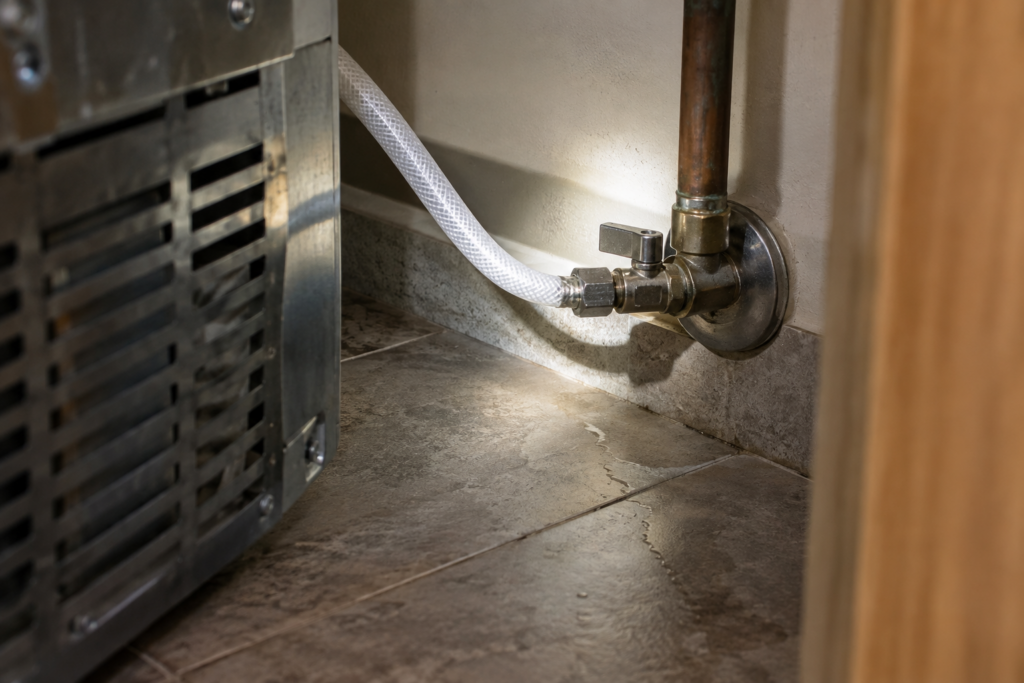
What Does EC30 Actually Mean on a Sub-Zero Ice Maker?
EC30 means the water inlet solenoid has stayed energized longer than a normal fill. This site's ice maker EC30 page calls it a water valve solenoid that is over-active, and the matching refrigerator EC30 page calls it ice maker water valve excess activation. A normal fill is brief, in the range of 8 to 10 seconds, and the code is raised when the valve runs well past that window.
One honest wrinkle: our ice maker service page groups EC30 under no-ice problems, a water inlet valve or harvest cycle fault, and describes it as needing component-level diagnosis. So the code points at the fill system first, and the diagnostic is what confirms whether it stops there. A full harvest cycle test is part of that visit before any part is sourced.
Is It the Valve, the Screen or the Water Pressure?
The code page lists all three as possible causes, and two of them are cheap. A stuck-open solenoid and a failed fill sensor or control logic both need a technician. A blocked inlet screen and a pressure problem are the DIY-possible ones, and they are worth ruling out before anyone decides a part has failed.
- Confirm the shut-off valve is fully open. A valve that is only about 75 percent open can be the entire cause of EC30 in an otherwise healthy unit.
- Check that the supply line is not kinked anywhere between the valve and the ice maker.
- Look at supply pressure if you can. The site cites 20 to 120 psi as the working range for the ice maker; pressure above 120 psi can stop the solenoid from closing fully between fills.
- Power cycle once and watch the first fill. You should hear the valve open and water enter the tray within a few seconds, and the fill should take under about 10 seconds.
If EC30 returns in the first cycle with confirmed full pressure, the code page says the solenoid has failed and needs replacing by a technician. If pressure is the problem, a pressure-reducing valve on the supply line is what prevents EC30 from recurring after the solenoid is serviced, which is why fixing the valve alone sometimes does not end the story.
Is It Safe to Keep the Ice Maker Running With EC30?
No, not for ice production: turn the ice maker off and close its water supply until the fault is resolved. The ice maker page is direct that EC30 may cause the unit to run water continuously or produce no ice, and that the risk is water damage or a flooded cabinet. On a full-size refrigerator the fridge and freezer functions are unaffected, so the food is not the concern; the water line is.
The practical rule is to treat any pooled water or continuous dripping as the stop signal. Close the supply, wipe up the floor and leave the ice maker off. Our guide to Sub-Zero water line leak prevention covers the wider habits that keep a stuck valve from becoming a floor repair.
When a Replacement Makes More Sense Than a Repair
Replace only when the valve is one finding among several. The service page covers the UC-15I clear ice model and the UC-15IP standard model, and it lists the kinds of work beyond the valve: harvest cycle repair, ice level sensor replacement, evaporator plate and refrigerant system inspection, drain system cleaning and control board replacement. When more than one of those is on the table at once, the arithmetic changes.
- EC30 alone, valve confirmed is a repair at the water valve tier.
- EC30 with a stuck harvest cycle moves into harvest-system pricing and deserves a look at the unit's age.
- EC30 with signs of refrigerant-system trouble is the case where replacement is worth pricing seriously.
- EC30 on an older unit with recurring service calls is a history problem, not a valve problem.
For the general version of this decision, the parent guide is Sub-Zero ice maker repair or replace, and the ice maker not making ice guide covers the broader no-ice symptoms.
It also helps to know how the same visit unfolds, because the order of tests is what turns a code into a decision. The diagnostic is built to separate the cheap causes from the expensive ones before a part is ordered:
- Retrieve the fault codes and confirm EC30 is the only active one.
- Inspect the water system, including the shut-off valve, the line and the inlet screen.
- Run a full harvest cycle test to see whether the fill, the freeze and the release all behave.
- Quote from the result, in writing, before any part is sourced or any work starts.
Because the harvest test is part of the visit, you find out in one trip whether the valve is the whole story. If it is, you pay the valve tier. If it is not, you learn that before committing money to a part that would not have ended the code.
What the Repair Starts From and How to Book It
A water valve replacement starts from $245. The final cost is confirmed after on-site diagnosis, with a written estimate before any work begins, so the question of repair or replace is answered from what the technician finds rather than from guesses. Bring the date EC30 first appeared, whether water was on the floor, and what you found with the shut-off valve and the line. Then schedule a visit and keep the supply closed until the technician arrives.