 Daniel York
Key Takeaways
- EC20, EC21, EC24 and EC55 each point to a different link in the defrost chain, so the code narrows the part before any teardown.
- A heater that reads open is replaced, not repaired; a healthy heater with bad wiring or a failed sensor is a different job.
- Ask whether the heater is available separately for your exact model before approving work.
- Never chip ice from the evaporator; a puncture turns a heater job into a sealed system job.
- A manual defrost buys time only; the code returns at the next cycle until the fault is repaired.
The Bottom Line
A defrost heater is usually a part-level repair if the evaporator is intact. Get a diagnosis that names the failed link, and treat any evaporator damage as a separate decision.
When frost keeps building on the back wall of a Sub-Zero freezer, the defrost heater is the part everyone suspects, and the real question is how far the repair has to go. To replace or fix a Sub-Zero defrost heater is a decision with three possible endings: a heater alone, a heater plus the wiring or sensor around it, or a bigger conversation about the evaporator behind it. The whole-unit version of this choice is in our Sub-Zero repair-or-replace guide; this one stays with the defrost parts.
| What the diagnosis finds | Likely path | Why |
|---|---|---|
| Heater reads open on a meter, evaporator intact | Replace the heater | A burned-out element cannot be repaired; the part is the fix |
| Heater is fine, wiring burned or loose | Repair the harness or connector | The heater is healthy; the circuit that feeds it is not |
| Evaporator thermistor failed | Replace the sensor | The board cannot tell when to start or stop defrost |
| Control board output or relay failed | Board work, then compare with the unit's age | The heater is not being told to run |
| Evaporator damaged by ice or a puncture | Sealed-system decision | This is a different repair with a different cost |
What Do the Defrost Codes Say About the Heater?
They say which part of the chain failed, and that is the first step in choosing between a part and a project. This site records four defrost-related codes, and each points to a different place.
- EC20, no voltage feedback. The control did not see power on the heater circuit. The refrigerator EC20 page lists a failed heater, open or damaged wiring, and a failed relay or board output as the causes.
- EC24, heater insufficient. Power arrives, but the coil does not warm enough. The freezer EC24 page names a partly failed heater, a voltage drop in the circuit, or a timer that ends cycles too early.
- EC21, heater ran too long. The opposite problem: nothing told the heater to stop, which points at the defrost termination thermostat or the control board rather than at a weak element.
- EC55, defrost system fault. The freezer EC55 page lists a loose connection in the defrost circuit, a failed evaporator thermistor, or a failed relay.
The companion guide EC 24: the defrost underheat code explained goes deeper on the symptoms; this page is about the decision that follows them.
Can a Sub-Zero Defrost Heater Be Replaced on Its Own?
Often yes, but it depends on the model, because the heater sits at the evaporator behind the rear interior panel, and whether it is sold as a separate part depends on the model. Ask the technician to confirm whether the heater is available by itself for your model number before you approve work.
The reason it matters is cost structure. This site's freezer repair page lists the defrost heater, thermostat and limiter as one repair group, and it separates that group from compressor and sealed-system work. A heater replaced alone is a part-level job; anything that touches the refrigerant circuit is a different one.
- Heater only. The cleanest outcome. The unit is defrosted, the heater swapped and the cycle watched.
- Heater and thermistor. Often done together because an evaporator sensor that reads wrong will mislead the new heater as well.
- Heater and harness. A burned or chafed wire is a sign the heater overheated, so the wire is replaced with it.
How Do You Tell a Heater Fault From a Sensor or Board Fault?
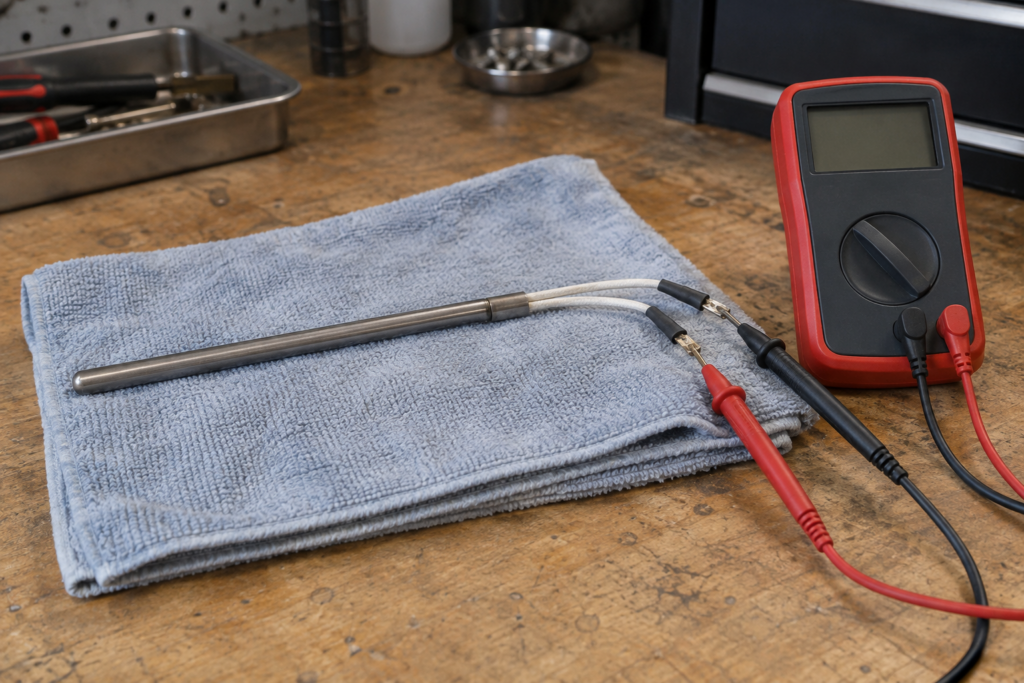
You test it; you do not guess. A technician reads resistance across the heater, checks the feed at the connector, and confirms the sensor value, and only then orders a part. The code pages give the markers: an open circuit on a meter means the heater itself, while good resistance with no power points at the wiring, relay or board.
Owners can help with observation rather than testing:
- Look at the frost pattern. A smooth sheet on the rear panel is the visible sign of defrosts that never finish.
- Note the timing. If the code returns at the next defrost after every manual defrost, the fault is in the circuit and not in a one-off event.
- Write down the code and the date. It tells the technician which of the four families to start with.
- Leave the panels on. Behind them are wiring and soft aluminum tubing that are easy to damage.
When Does the Evaporator Come Into the Decision?
It comes in when the coil itself is damaged, not merely iced. Frost and ice are a consequence of the heater fault, and clearing them with a manual defrost is safe, but chipping at ice is how a heater job becomes a coil job. The evaporator replacement cost guide and the sealed system guide cover that territory.
These signs suggest the evaporator should be part of the conversation:
- A hiss or oily residue near the coil, which can mean a leak.
- Corrosion or crushed fins that a technician sees once the panel is off.
- A heater fix that did not hold, with frost returning on a new heater.
If the unit is old and several of these are present, compare the written estimate with a replacement as in our freezer column guide.
What Happens After the Heater Is Replaced
You verify the fix over the next few defrost cycles, not on the day. A new heater should end the frost pattern, and the check is simple: look at the back wall over the next several days and confirm the code does not return.
- Frost thinning rather than thickening is the sign of success.
- Frost returning within 48 hours of a manual defrost means another link in the chain is failing.
- A freezer holding temperature after the next full defrost closes the case.
What You Can Safely Do While You Wait
You can protect the food and slow the damage without opening anything. The site's pages describe a manual defrost as a stopgap only: the code returns at the next cycle because a power reset does not repair a heater circuit.
- Move frozen food to another freezer if the compartment passes 10 degrees Fahrenheit.
- Do a manual defrost only if frost is blocking airflow, with a towel on the floor.
- Keep a log of how many days frost takes to return.
- Do not reset repeatedly, since each reset hides the pattern from the technician.
If the unit is still under a manufacturer warranty or an extended coverage plan, check it before booking any repair. Our warranty coverage guide explains what happens when a Sub-Zero breaks.
What to Ask When You Book
Ask for a diagnosis before a part, and ask for a written estimate that names the heater, any sensor or wiring, and the labor separately. A diagnostic starts from $145, and the final price is confirmed after the on-site diagnosis with a written estimate before any work begins. The freezer repair page lists the defrost work we handle.
Include the model number, the code and the frost pattern, then schedule a visit. If the technician finds only a heater or a sensor, you have a part-level repair; if the evaporator is involved, you will know that before any money is committed.