 Daniel York
Key Takeaways
- The SLOW-ICE alert is a performance condition, not a control fault, so a power reset does not help.
- Sub-Zero undercounter ice makers vent through the front grille; a closed-in cabinet with no air circulation is the first thing to fix.
- Water pressure 10 to 15 PSI below the minimum can slow production across the whole day, so check the shutoff valve and supply first.
- The unit is safe to keep using, but zero ice or an EC30 code alongside the slowdown means stop waiting and book service.
- Book when output stays below 12 lbs per day with good ventilation and pressure, or when the unit is over six years old with an unserviced valve.
The Bottom Line
Slow ice on a Sub-Zero undercounter ice maker is almost always heat or water before it is a failed part. Clear the grille, confirm pressure, keep a short log, and book a visit if the output stays low.
An undercounter ice maker that still fills its bin, only more slowly each summer, is the quietest failure a Sub-Zero owner will meet. Nothing flashes, nothing leaks, the cubes look fine, and yet the bin that used to be full on Friday is half empty on Sunday. This site logs the pattern as the SLOW-ICE alert on the UC-15I clear ice model and the UC-15IP standard model, and Sub-Zero ice maker slow ice production is usually a conditions problem before it is a parts problem.
| What you notice | What it usually points to | First move |
|---|---|---|
| Bin only partly full after a full day | Warm installation space or a restricted water supply | Clear the front grille and open the shutoff valve fully |
| Output falls in hot weather, recovers in winter | Heat the condenser cannot shed | Improve air circulation around the unit |
| Cubes smaller or thinner than before | Less water per fill cycle | Check supply pressure and the inlet screen |
| No ice at all | A different fault, covered by the NO-ICE alert | Move to that page, do not keep waiting |
| EC30 appears next to the slowdown | Water valve behavior, not just flow | Stop and book a diagnostic |
What Causes Sub-Zero Ice Maker Slow Ice Production?
Three causes account for nearly every case on this site's SLOW-ICE page: a warm installation space, a partly restricted water inlet, and an aging inlet valve that no longer opens fully. The first two are things an owner can change in an afternoon; the third needs a technician.
The page treats SLOW-ICE as a performance condition rather than a control fault, which is why a power reset does nothing for it. The machine is working, it is simply working at a lower rate than its rating, and the rate is set by how well it can shed heat and how much water it receives per cycle.
Ventilation First: The Free Check
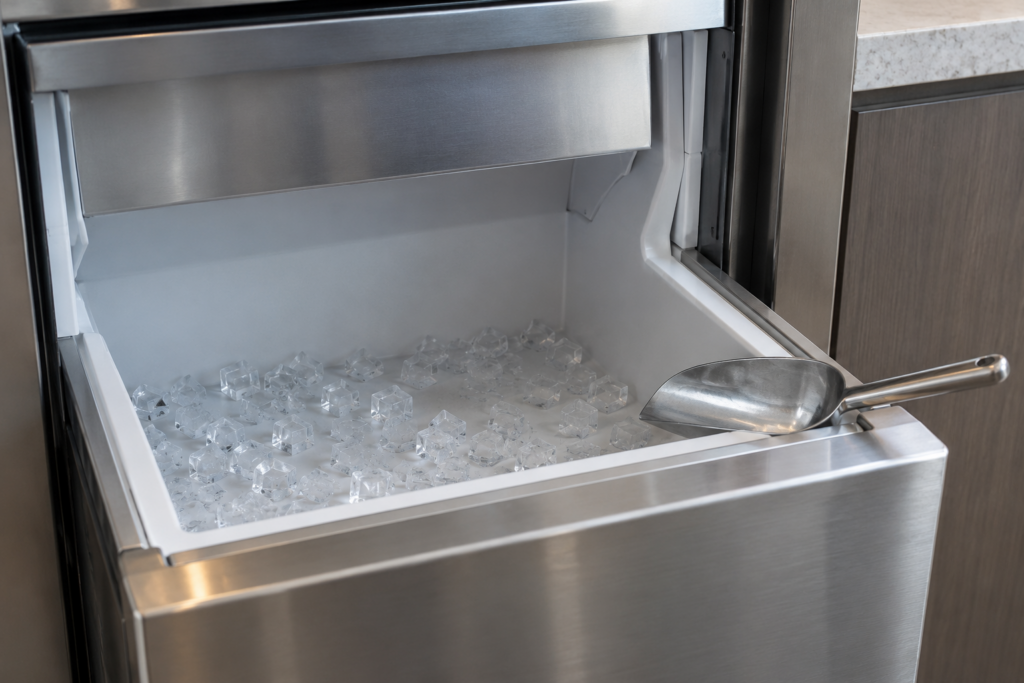
Sub-Zero undercounter ice makers vent through the front, so the base grille has to stay clear for the condenser to push warm air out. On installations where the unit sits in a tightly closed run of cabinetry with no path for that air to circulate, heat builds up and production falls.
- Look at the front grille for stored items, a mat or a panel edge that sits too close to it.
- Feel the air at the grille after an hour of running. Hot, stale air that lingers means it has nowhere to go.
- Check the room, not only the cabinet. A kitchen above 80°F makes the slowdown clearly worse, according to the symptom list on the code page.
- Note the season. If the slowdown follows the weather, ventilation is the first suspect, not the valve.
One practical habit helps more than any repair: leave the base grille uncovered and keep it free of anything stored in front of it. Owners who build a kick plate or slide a cabinet panel close to the grille during a remodel often trace a later slowdown back to that change, so if the problem started after cabinet work, look there first.
The code page puts a number on how much this can matter: the unit's output rating of 23 lbs per day applies at a specified ambient temperature, and in a poorly ventilated cabinet in summer real output can sit 30 to 40 percent below that rating. It describes this as a thermal limit of the installation rather than a defect, which is the useful distinction. A machine that is merely hot does not need a repair.
Water Supply: Pressure, Screen and Valve
A machine that receives less water per cycle makes thinner ice and smaller batches, and the code page describes exactly that: harvest cycles that complete but deliver fewer or smaller cubes. Two supply checks are safe for an owner, and one belongs to a technician.
- Open the shutoff valve all the way. A valve left half closed after earlier plumbing work is a common, boring cause.
- Confirm supply pressure. A gauge on the inlet briefly shows whether the line is within the range in the installation guide. The page notes that a drop of even 10 to 15 PSI below the minimum can slow production across the whole day.
- Ask about recent plumbing work on the same supply branch, since another fixture or a new filter can lower pressure at the ice maker.
- Leave the valve itself to service. An aged inlet valve that opens only partway reduces flow without ever triggering EC30, and testing it means opening the cabinet.
Do the supply checks at about the same time each day, so you can compare the first batch with what you remember. A single thin batch tells you little; three in a row tells you the supply is the issue. Write down what you see rather than trusting memory, because summer slowdowns creep in over weeks and are easy to misjudge.
A filter cartridge that has gone past its interval also restricts flow, so it is worth confirming the filter is current. Our guide to the Sub-Zero water filter replacement schedule covers the interval, and the CLEANING-DUE alert guide explains why scale in the water circuit slows the machine on top of that.
Is It Safe to Keep Using a Sub-Zero Ice Maker That Makes Less Ice?
Yes. The code page states that the unit is producing ice and is safe to use, and that SLOW-ICE reduces quantity without creating a safety or food-quality concern. The cost of waiting is only inconvenience, and the repair does not get more expensive because you spent a week on the free checks first.
Two things change that answer. If production drops to zero, you are no longer looking at SLOW-ICE; the NO-ICE page and our guide to a Sub-Zero ice maker not making ice take over. And if the EC30 code appears alongside the reduced output, the water valve is behaving abnormally, which is worth a technician rather than another week of observation.
When Should You Book Service?
Book when the free checks are done and the bin is still short. The code page gives three triggers, and they are a good test of whether you have done enough yourself:
- Output stays below 12 lbs per day in a well-ventilated installation with confirmed water pressure.
- The inlet valve flows yet each harvest still delivers a consistently small batch.
- The unit is more than six years old and the inlet valve has never been serviced.
- The slowdown is accompanied by EC30 or by any sign of water where it should not be.
Keep a simple log before the visit: the date, the room temperature, how full the bin was after 24 hours, and what you already tried. That gives the technician the pattern, and it shortens the diagnostic. Water valve and sensor work on an undercounter ice maker starts from $245 on the ice maker repair page, with the final price confirmed after an on-site diagnosis and a written estimate before any work begins.
If you would rather have a technician check ventilation, pressure and valve flow in one visit, you can schedule a visit and mention the slowdown pattern. For the repair-side decision on the valve itself, see Sub-Zero EC30 water valve repair or replacement.