 Daniel York
Key Takeaways
- Confirm the exact model and serial number from the rating plate before any decision or part order.
- Sensor, fan, gasket and defrost faults are usually worth repairing even on a unit more than ten years old.
- Compressor overrun codes need a diagnosis, because a blocked condenser and a sealed-system fault look alike.
- A built-in column adds access labor to every repair, but replacement adds panels, cabinetry and installation.
- A repeating pattern of different parts failing is the moment to compare a written estimate with a new unit.
The Bottom Line
Fix the 600 series when the fault is a part and the unit has been looked after. Weigh replacement only when the sealed system or the board fails on an old unit with a history of repairs.
People who search for a specific 600 series model number are usually standing in front of a built-in refrigerator that is ten or more years old and has just started to misbehave. The 600 series is the line this site's code pages describe as built-in refrigerator columns, and the question is rarely whether it can be repaired but whether one specific failure on one specific unit justifies it. Our broader overview is Is It Worth Repairing a Sub-Zero Refrigerator?; this guide narrows the answer to the 600 series and to the failures it tends to show.
| Failure | Where this site records it | Leaning |
|---|---|---|
| Cabinet or evaporator thermistor | EC05, EC07, EC08 | Repair: a sensor, not a system |
| Defrost heater or its circuit | EC20, EC24 | Repair, then watch the freezer |
| Compressor overrun | EC40 for the freezer, EC50 for the refrigerator | Diagnose first; this can be a cause or a result |
| Worn door gasket | Gasket inspection notice | Repair: cheap compared with the damage it causes |
| Control board | Several codes at once after a power event | Compare with the age of the unit |
First, Confirm What You Actually Own
Do this before any decision, because the name "600 series" is used loosely and a part order or a quote only makes sense for an exact model. The rating plate sits on the interior wall, and for built-in refrigerators and integrated columns this site's model number guide says to look at the upper interior wall of the fresh food section.
- Photograph the plate rather than copying it by hand, since a misread character can send a part order to the wrong revision.
- Keep the serial number with the model. The model says what the unit is; the serial says which one it is and what running changes it carries.
- Note the install year, because age is half of any repair decision.
If a display on an older unit shows a code written differently from the EC-numbered codes on this site, do not assume it means the same thing. Check the label and the owner's manual for your exact model first.
Is It Worth Fixing a Sub-Zero 600 Series Refrigerator After 10 Years?
Usually yes, when the fault is a sensor, a fan, a gasket or a defrost part, and it deserves a longer look when it is the sealed system or a control board on a unit well past its design life. Our maintenance schedule guide describes Sub-Zero appliances as engineered for service lives of 20 years or more, which is why age alone should not decide it.
The better test is whether this is the first repair of its kind or the third in a few years. A first failure of one part on a unit that has been serviced regularly points to repair. A pattern of different parts failing, with a warm freezer and a noisy compressor, points to comparing a written estimate with a new built-in, which also needs cabinetry work.
Which 600 Series Failures Are Worth Repairing?
The ones that restore the unit to full life for a part-level price, and this site's code pages show which those are. Read the one that matches your display before you decide anything.
- Thermistor faults. The EC05 page covers the refrigerator cabinet thermistor, EC07 the freezer cabinet thermistor, and EC08 the freezer evaporator thermistor. A sensor reading open or shorted is a small part.
- Defrost faults. EC20 means the heater circuit gives no voltage feedback; EC24 means the heater is insufficient. The related EC 24 guide explains the difference. These repairs cost less than the frost damage of ignoring them.
- Compressor overrun codes. EC40 and EC50 describe the compressor running too long on the freezer and refrigerator side. Treat them as a diagnosis task: a blocked condenser or a failing fan can cause them, and a sealed-system fault can too.
- Door gasket and condenser care. The cheapest items are also the ones that prevent the expensive ones, as the condenser coil cleaning guide shows.
What Does the Built-In Installation Change?
It changes the labor, not the logic. A built-in column sits in a tight cabinet cutout, and our built-in versus freestanding cost guide explains that the unit often has to be slid forward, and custom panels removed, before the back, the top or the evaporator can be reached.
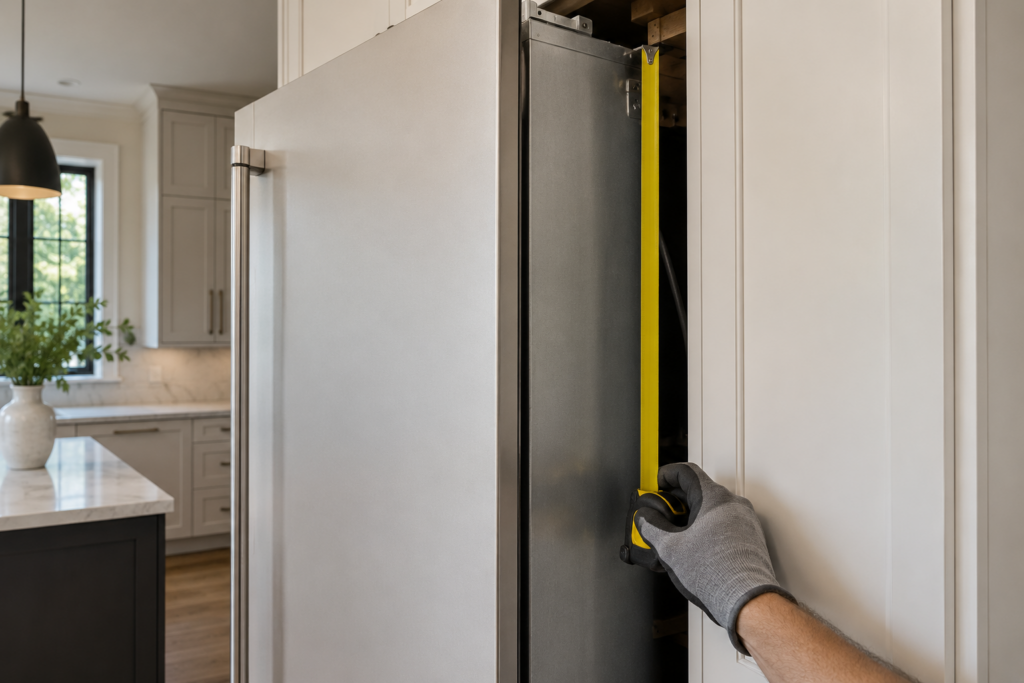
That has two practical consequences for the decision:
- Access work is part of any quote, so compare quotes for the same job rather than for the same part.
- Replacement is not just a new appliance. A new built-in may need new panels, cabinetry changes, a water line and an electrician, which is why a repair of a serviceable unit remains attractive.
Keep the power side in mind as well. A control board that fails after a storm is often a surge problem, and the surge protector notice explains how to protect the replacement.
How Long Will a Repaired Unit Keep Going?
A part-level repair restores the unit to the remaining life of everything else in it, so the honest answer depends on the condition of the rest. Two things improve the odds noticeably: a clean condenser and a good gasket, because they reduce the load on every other part.
- Ask what else the technician saw. A worn gasket, dusty coil or tired fan found during the visit is a cheap fix that protects the main repair.
- Keep the paperwork. The rating plate photo, install year and service history make the next call shorter and the next decision easier.
- Follow the maintenance rhythm. A short routine twice a year is cheaper than the failures it prevents.
One caution about online quotes: parts for a 600 series cabinet are matched to the model, so a price quoted without the plate details is a rough guess. Treat any number you read in a forum as a conversation starter, and anchor the decision to the written estimate for your own unit.
A Short Way to Decide
Work through these in order and stop at the first answer that settles it.
- Identify the exact model and age from the rating plate photo.
- Match the symptom to a code page and note whether the cause is a sensor, defrost part, fan, gasket or sealed system.
- Ask whether the unit has been maintained. Clean condenser coils and a good gasket make a repair far more likely to last.
- Get a written estimate after an on-site diagnosis, with the model number on it.
- Compare it with the full cost of replacement, including panels and installation, not just the sticker price of a new unit.
The full repair-or-replace framework for the sealed system is in our sealed system guide.
When to Book a Diagnostic
Book when a code repeats after a reset, when the freezer drifts warm, or when you are weighing a large repair against replacement and want a named cause. A diagnostic starts from $145 and ends in a written estimate before any work begins; the final price is confirmed on site. The built-in refrigerator repair service page lists what a visit includes.
Have the plate photo, the install year and the code history ready, then schedule a visit and say that you are deciding between repair and replacement. That tells the technician to bring the answer, not only the part.