 Daniel York
Key Takeaways
- EC15 is logged as a Sealed System Fault, a different category from the zone alarms EC10 and EC12 on the same wine column.
- For most columns under about 15 years old, a sealed system repair costs well under the price of removing and replacing a built-in unit.
- A first EC15 is treated as an isolated event; a second one within two years is worth a second diagnostic before repeating the repair.
- A sealed system repair starts from $450, a compressor replacement from $650, and a diagnostic to isolate the cause starts from $145.
- Wine has enough thermal mass to buy time — keep the door shut and move irreplaceable bottles if the fault has lasted more than a day.
The Bottom Line
A Sub-Zero wine column worth repairing after EC15 is the norm for units under about 15 years old — sealed system work is well under the cost of replacing a built-in column. Get a second opinion only if the fault repeats within two years.
Is it worth repairing a Sub-Zero wine column that has just thrown an EC15? Usually yes, but this is the one code on the column where the answer genuinely depends on age and history rather than being an easy yes across the board. EC15 is not a zone alarm you can wait out — it is the sealed refrigeration circuit itself, and that changes the math.
| Column age | First EC15 on record | General guidance |
|---|---|---|
| Under 8 years | Yes | Repair — sealed system work is well under replacement cost |
| 8–15 years | Yes | Repair, and address any deferred maintenance at the same visit |
| 8–15 years | Repeat within 2 years | Get a second diagnostic before committing — repeat failures change the math |
| Over 15 years | Any | Compare the repair quote against a new column before booking |
What Does EC15 Mean on a Sub-Zero Wine Column?
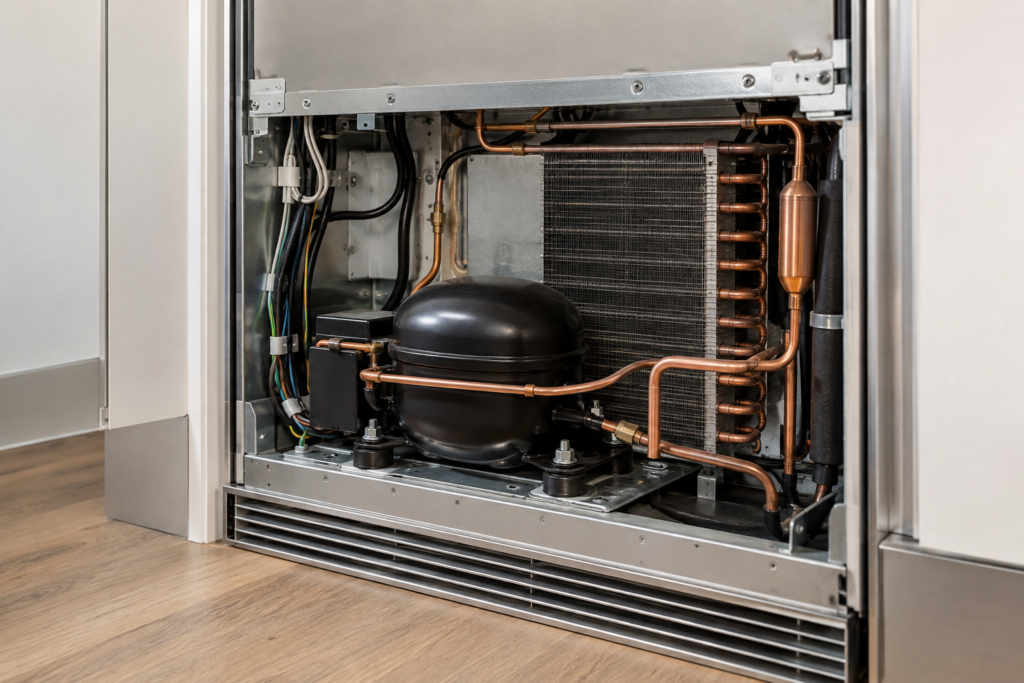
EC15 means the sealed refrigeration circuit itself has faulted, not a zone control or a sensor. This site logs EC15 as a Sealed System Fault on the wine column, which puts it in a different category from the zone-specific alarms — EC10 and EC12 — that this same column reports for the upper and lower compartments separately. Those two describe one zone drifting warm while the other holds; EC15 describes the compressor circuit itself, and it usually means both zones drift together.
Is a Wine Column Worth Fixing After a Sealed System Fault?
Yes, for the large majority of columns still within their first decade or so, and the reasoning is the same one that applies to any built-in refrigeration: a sealed system repair on a column runs well under the cost of removing a flush-installed cabinet, patching the surrounding millwork, and installing a replacement unit that fits the same opening. A column is architecture as much as it is an appliance, and that changes the comparison most owners expect from a freestanding wine fridge.
- Repair cost against replacement cost almost always favors repair on a column under about 15 years old.
- Installation disruption — cabinetry, trim and sometimes flooring — adds real cost to any replacement that a repair skips entirely.
- A first EC15 on a column with no other sealed-system history is treated as an isolated event, not a sign the unit is failing wholesale.
- A second EC15 within two years is different information, and it is worth a second diagnostic before paying for another repair on the same circuit.
What a Sealed System Repair on a Column Involves
The technician has to isolate whether the fault is a refrigerant leak, a failing compressor, or a blocked line — the same three candidates as any sealed system, but reached through a narrower cabinet with less room to work. A leak search, a recharge, or a compressor swap all carry different labor, and none of them is quoted honestly before that isolation step. A sealed system repair on a wine column starts from $450, and a full compressor replacement, when the leak search points there, starts from $650. A diagnostic visit that performs the isolation starts from $99, and the price for whichever repair follows is confirmed after that visit, with a written estimate before work begins.
This narrows to the same three suspects that our general guide to is it worth repairing Sub-Zero wine storage covers for wine refrigeration more broadly — that guide is the right parent read if your unit is a wine-storage or wine-fridge model rather than a built-in column, since the two are different product lines on this site's own taxonomy.
When Does It Stop Being Worth It?
Past roughly 15 years, or after a second sealed-system fault inside two years, get the repair quote and compare it against a replacement column before agreeing to the work. That is not a rule that says stop repairing — it is a rule that says get both numbers in hand. A column collection with real value in it is also worth weighing against risk: a repeat sealed-system fault means a higher chance of losing a batch of bottles to a slow warm-up between now and the next failure.
Our sealed system repair or replace guide walks through that comparison in more detail if EC15 turns out to be your second sealed-system event rather than your first.
Protecting the Collection While You Decide
Wine has enough thermal mass that a column holds temperature for hours after cooling stops, which buys you time to make a decision rather than a panic call.
- Keep the door shut as much as possible while you arrange service.
- Move any irreplaceable bottles to a backup fridge if the fault has been present more than a day.
- Write down when EC15 first appeared and whether either zone has thrown EC10 or EC12 recently — that history shortens the diagnostic.
- Book the diagnostic promptly rather than waiting to see if the code clears itself; a sealed system fault does not self-resolve.
- Ask about a loaner solution for the collection if the repair is expected to take more than a day or two.
Wine column service is covered under Sub-Zero wine column repair. When you are ready to move, schedule a visit and give the technician the code and how long it has been present.
EC15 Compared to a Zone Alarm Like EC10 or EC12
EC15 is a bigger event, but not necessarily a more expensive one to diagnose. A zone alarm tells you one compartment has drifted, and the cause is usually a damper, a control or an airflow restriction local to that zone — a repair our common-problems guide to Sub-Zero built-in wine column repair walks through in more detail. EC15 tells you the shared circuit both zones depend on has faulted, which is why both compartments tend to move together once the fault has been present a while.
The overlap worth knowing about: a wine column that has been quietly running a zone alarm for months, unaddressed, puts more strain on the shared compressor than a column maintained on schedule. It is not a direct cause of EC15, but it is not unrelated either — a system already working harder than it should is a system with less margin when a genuine sealed-system fault does show up.
- Address zone alarms promptly rather than letting them run in the background for months.
- Treat a first EC15 as new information, not confirmation that the whole unit is declining.
- Ask the technician whether the zone history and the sealed-system fault are connected on your specific unit, since the answer changes what maintenance follows the repair.
None of this changes the headline answer for a first EC15: it is still worth fixing on the large majority of columns still inside their expected service life, and the zone history is context for the conversation, not a reason to hesitate on the repair itself. Bring both histories to the same appointment if you have them, and let the technician decide whether they are related on your unit rather than guessing from the code alone.