 Daniel York
Key Takeaways
- Evaporator fan bearing noise does not affect cooling right away, but a worn bearing will eventually fail and the column will warm.
- A manual defrost with the breaker off for eight hours rules out ice on the blade before you pay for a repair.
- Grinding or scraping, or either zone warming above setpoint, means stop relying on the column for storage.
- Fan motor work on a wine column sits in the same price tier as compressor work, so weigh it against the age and condition of the whole unit.
- The final price is confirmed after on-site diagnosis, with a written estimate before work begins.
The Bottom Line
If the fan noise is the only symptom and both zones hold their setpoints, repairing the fan is usually worth it. If a sealed-system code or several age-related faults are also showing, weigh the whole column, not the fan.
A clicking or whining fan inside a Designer wine column is easy to live with for months, which is exactly why owners end up asking whether the fan needs fixing at all while the column still cools. It does, because the part making the noise is the one that moves air across the evaporator, and when it finally stops, the column warms.
| What you notice | What it suggests | Worth fixing? |
|---|---|---|
| Faint click or whine, cooling normal, noticed recently | Early bearing wear, or ice or debris near the blade | Yes, after ruling out the free causes |
| Noise gone after a manual defrost | Ice on the fan blade touching the housing | Nothing to fix; keep watching |
| Noise returns after defrost and keeps growing over months | A worn evaporator fan motor bearing | Yes, if the column is otherwise sound |
| Grinding or scraping, or a zone warming above setpoint | Bearing failing and airflow dropping | Fix now; do not rely on the column for storage |
| Fan noise plus a sealed-system code | A bigger fault than the fan | Decide on the sealed system first |
Is a Sub-Zero Wine Column Fan Worth Fixing?
Usually yes, when the rest of the column is healthy, because the fan is a single moving part whose failure has a predictable ending: airflow stops and the cabinet warms. This site's fan-noise code page describes the condition as evaporator fan bearing noise, a clicking or whining sound that starts with the compressor and stops when it stops, and it states that a worn bearing will eventually fail completely.
The honest complication is price. The wine column repair page prices sensor and lighting repairs low, but puts fan motor work in the same tier as compressor work. That means the fan decision is not a cheap-part decision. It is a decision about whether a column in good condition deserves a repair in the same price band as a compressor job, and the answer depends on age, condition and what is stored in it.
Can You Keep Using the Column While the Fan Is Noisy?
Yes, for now: fan bearing noise does not immediately affect cooling or wine storage safety, so the column can stay in service while you arrange the repair. The code page is clear about the limit, though. A worn bearing will eventually fail completely, stopping airflow and causing the column to warm, so the advice is to arrange service before it fails rather than waiting for it to.
Two changes turn "keep using it" into "stop relying on it". The first is a change in the sound, from clicking or whining to grinding or scraping. The second is either zone beginning to warm above its setpoint alongside the noise. Either one means the fan is no longer moving enough air, and the wine is the thing at risk.
- Clicking or whining that tracks the compressor is the normal bearing-wear pattern: it starts when the compressor starts and stops when it stops.
- A sound that is louder with the door open is only more audible, not worse, particularly in a quiet open-plan kitchen.
- A sound that grows over months points at progressive wear rather than a one-time object near the blade.
Does a Manual Defrost Fix Fan Noise?
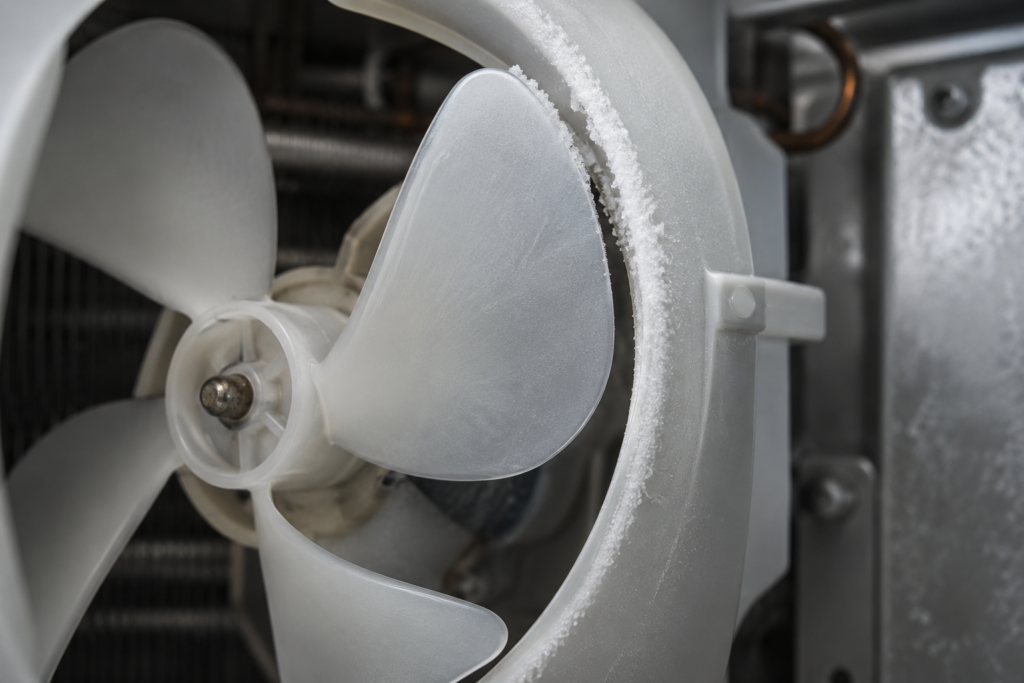
Sometimes, and it is the one free test worth running before any repair decision. Ice building up on the evaporator coil or fan blade can make the blade touch its housing, which produces a rhythmic click that looks exactly like a failing bearing. The site's own check is to switch the dedicated breaker off for eight hours with both doors propped slightly open and a towel at the base, which forces a complete defrost.
- Move the bottles first to a stable, cool place so the collection is not warming while the column defrosts.
- Prop both doors slightly open and put a towel at the base to catch melt water.
- Restore power after eight hours and listen through at least one full compressor cycle.
- Treat returning noise as a worn bearing, because ice does not explain a sound that comes back immediately.
The code page also lists a third cause: a small piece of foil or a label fragment lodged near the blade. That is a DIY-possible cause, but it is also the reason not to reach into the airflow area yourself. If a defrost does not clear the noise, a technician can check for debris while the fan is being tested.
What the Fan Repair Involves and Where the Price Starts
The repair is a fan motor service, listed on the site as circulation and condenser fan motor service for the column. Fan motor work starts from $895 on that page, in the same tier as compressor work, and the final price is confirmed after on-site diagnosis with a written estimate before any work begins. A diagnostic visit comes first, to confirm that the fan, and not ice or debris, is the cause.
The models this applies to are the Designer wine columns the site services: the DEC1850W at 18 inches, the DEC2450W at 24 inches and the CL3050W at 30 inches. If your column is one of these, the repair page is the one that applies; if it is a Classic BW-series unit, use the wine storage repair page instead.
Ask for the estimate to name the part, the labor and any condition that would change the figure. A technician who finds ice on the blade, or debris near it, will say so, and a diagnostic that ends in "nothing to replace" is a good outcome rather than a wasted visit:
- Bearing confirmed means a fan motor service at the starting tier above.
- Ice or debris found means the cause is cleared without a part, and the visit becomes a diagnostic.
- A second fault found means the conversation moves from the fan to the whole column.
How to Weigh It Against the Age of the Column
Treat the fan as one line in a larger picture, not as the whole decision. A column with a single noisy bearing and nothing else wrong is a good candidate for repair, because the fix addresses a known wear part and the rest of the cabinet is untouched. A column that is also showing a warm-temperature alarm, fading LED strips and an aging door seal is telling you the whole unit is entering the same phase of life, and a fan repair will not change that.
- Repair when the noise is the only symptom and both zones hold their setpoints.
- Look harder at the whole column if a sealed-system code such as EC15 is also present; our EC15 worth-repairing guide covers that decision.
- Remember the contents. A noisy fan that is risking a valuable collection is a stronger case for repair than one in a column used for everyday bottles.
For the general question of whether to repair a wine unit at all, the parent guide is is it worth repairing Sub-Zero wine storage, and for a wider tour of column faults see Sub-Zero built-in wine column repair.
Booking and What to Tell the Technician
Describe the sound, when it happens in the cycle, and whether it has grown over weeks or months; the code page lists those as the details that separate a bearing from a one-time foreign object. Mention whether you ran a manual defrost and whether the noise returned. If you prefer to start with a general visit, appliance diagnostics is the entry point, and you can schedule a visit when you are ready. Humidity and vibration are the other things a wine column owner should keep an eye on, and Sub-Zero wine storage humidity and vibration care covers both.