 Daniel York
Key Takeaways
- Sub-Zero beverage center repair cost splits mainly between two symptom codes: NO-COOL and COMPRESSOR-LOUD.
- NO-COOL repairs start from $220 and can involve a door seal, a control board or the sealed system — only a diagnostic tells you which.
- A loud compressor is often a mounting or vibration problem before it is a failing compressor; that repair starts from $260.
- For units under about ten years old, both faults are usually worth fixing rather than replacing the built-in unit.
- A diagnostic visit starts from $145, and the final price is set after that diagnosis with a written estimate first.
The Bottom Line
A Sub-Zero beverage center repair cost depends on which code you have far more than on the size of the unit — NO-COOL and COMPRESSOR-LOUD point at different parts and price differently, and a diagnostic is what separates a $220 fix from a sealed-system job.
A Sub-Zero beverage center repair cost depends far more on which of two failures you have than on the size of the unit. A compressor that has gone loud is a different job, at a different price, from a compartment that will not hold temperature — and the two codes this site logs for the beverage center line up almost exactly with those two symptoms.
| Code | What this site's code page calls it | Typical cause | Starting price |
|---|---|---|---|
| NO-COOL | Unit Not Cooling to Setpoint | Sealed system, control board or door seal | from $220 |
| COMPRESSOR-LOUD | Compressor Producing Abnormal Noise | Mounting, refrigerant charge, or a compressor nearing end of life | from $260 |
What Drives a Beverage Center Repair Bill
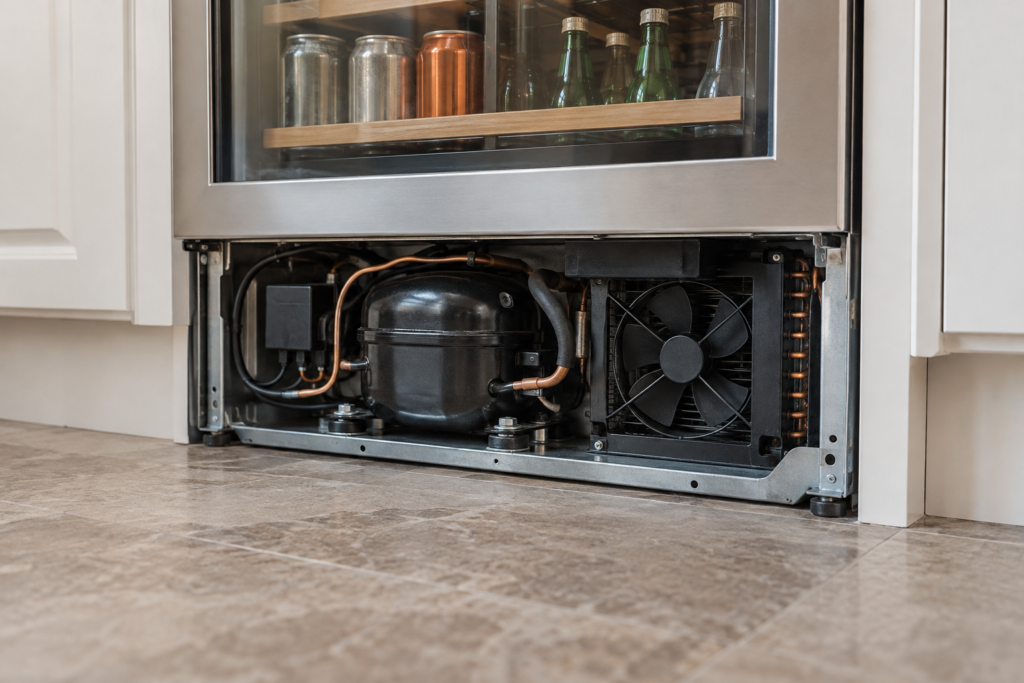
Access, mostly. A Sub-Zero beverage center is almost always installed under a counter, flanked by cabinetry on both sides, which means every repair starts with getting the unit out far enough to work on rather than reaching in through a door. This site logs NO-COOL as Unit Not Cooling to Setpoint and COMPRESSOR-LOUD as Compressor Producing Abnormal Noise, and neither description tells you the part — both are symptom codes that still need a technician's hands on the unit to narrow down.
How Much Does a NO-COOL Repair Cost?
A NO-COOL repair starts from $220 for a diagnosed door-seal or airflow fix, and rises from there if the sealed system itself is involved. The reason the range is wide before diagnosis is that "not cooling to setpoint" describes three unrelated failure paths equally well: a seal that has lost its gasket tension and is letting warm air in, a control board that is no longer driving the compressor correctly, or a sealed system that has lost refrigerant charge. Only the last of those is expensive, and only a diagnostic tells you which one you have.
- Check the door gasket first — press a sheet of paper into the closed door and pull; a gasket in good condition grips it.
- Note whether the compressor is running at all, and for how long at a stretch, before you call.
- Check nearby heat sources — a beverage center installed next to a dishwasher or oven cabinet can read warm without a fault of its own.
- Note the room temperature around the unit, since a garage or outdoor bar setting can push a marginal seal or fan problem into a NO-COOL code faster than an indoor kitchen would.
Is a Loud Compressor Always a Full Replacement?
No — a loud compressor is often a mounting problem before it is a failing compressor. COMPRESSOR-LOUD repairs start from $260 for a re-mount or vibration-isolation fix, which is the more common outcome on a unit installed level but resting against cabinetry that transmits the sound. A compressor genuinely nearing the end of its life sounds different: a grinding or knocking note that changes with the electrical cycle rather than a steady hum or rattle. That distinction is worth describing accurately when you book service, because it changes what the technician brings on the first visit.
Is It Worth Fixing an Older Beverage Center?
For a NO-COOL or COMPRESSOR-LOUD fault on a unit under about ten years old, yes, almost always — both repairs are well below the cost of a comparable replacement unit, plus the disruption of pulling a built-in appliance out of finished cabinetry. Past that age, weigh the specific fault: a seal or mounting fix stays worth doing at almost any age, while a sealed system failure on a much older unit is the point where our guide to is it worth repairing a beverage center is the better read before you commit to a repair bill.
A diagnostic visit that identifies which of the two codes' causes you actually have starts from $99. The final price for whichever repair follows is confirmed after that diagnosis, with a written estimate before any work begins — nothing here is billed on a guess.
Getting an Accurate Quote
The fastest way to a tight quote is to hand the technician the code, how long the compressor runs, and whether the noise or the temperature problem came first. That order of events often points straight at seal, board or sealed system before the panel is even off.
- Write down the exact code shown on the display and when it first appeared.
- Time one full compressor cycle if you can, from start to stop.
- Check the surrounding cabinetry for heat sources or a base grille that has been blocked.
- Ask for the written estimate before any repair work begins, as with any Sub-Zero appliance diagnostics visit.
Beverage center service is covered under Sub-Zero beverage center repair, and a diagnostic can be booked through appliance diagnostics. When you are ready, schedule a visit with the code and your observations in hand.
A Beverage Center Compared to a Full Refrigerator Repair
It compares favorably in almost every case, mostly because a beverage center is a much smaller sealed system doing a narrower job — holding a compartment several degrees above freezer temperature rather than running the wider range a full refrigerator or freezer covers. That smaller system generally means less refrigerant, a smaller compressor, and less labor to access, all of which keep beverage center repairs toward the lower end of Sub-Zero's refrigeration repair range rather than the higher end.
Where the comparison flips is condenser maintenance. A beverage center's condenser sits in a tighter base than a full-size refrigerator's, which means it can foul faster in a household that never checks it. Our guide to condenser coil cleaning applies to a beverage center just as much as it does to a full-size cabinet, and it is worth reading before you assume a NO-COOL code means anything more serious than an overdue clean.
- Ask whether the technician checked the condenser as part of the NO-COOL diagnosis — it is the least expensive cause to rule out first.
- Compare the quoted repair against the unit's age, not against what a full-size refrigerator repair would cost, since the two are not priced the same way.
- Keep the service history for the beverage center separate from the rest of your kitchen's appliances if you have more than one Sub-Zero unit, since parts and access differ by model.
- Ask what the warranty covers before paying out of pocket, since a unit still under coverage may qualify for a no-cost or reduced-cost repair on either code.
One more comparison worth making before you book service: a beverage center installed inside a wet bar or an outdoor kitchen sees a different maintenance load than one built into a dry indoor kitchen run. Outdoor and near-water installations tend to need condenser checks on a shorter interval, simply because the grille collects more airborne debris in those settings, and that alone can be the difference between a NO-COOL code that clears with a clean and one that turns into the sealed-system repair described above. If your unit sits in a wet bar, an outdoor kitchen or anywhere near heavy foot traffic, mention that setting when you book, since it changes what a technician checks first.